Trimoryn has a fully disclosed label (a transparency advantage). Per capsule it contains berberine HCL 15 mg, konjac glucomannan 50 mg, Akkermansia muciniphila 1 billion CFU, Bifidobacterium breve 1 billion CFU, alpha lipoic acid 25 mg, cinnamon bark extract 100 mg, turmeric (95% curcumin) 25 mg, riboflavin 25 mg, mangosteen 100 mg, prickly pear 100 mg, and resveratrol 12 mg. The ingredients are evidence-inspired and well chosen — but several key doses are below those used in research.
One of the best things about Trimoryn is that it tells you exactly what's inside and how much - a fully disclosed Supplement Facts panel, not a hidden "proprietary blend." That transparency lets us do something we can't with many supplements: compare each ingredient's dose to the research. Here's an evidence-based, ingredient-by-ingredient look.
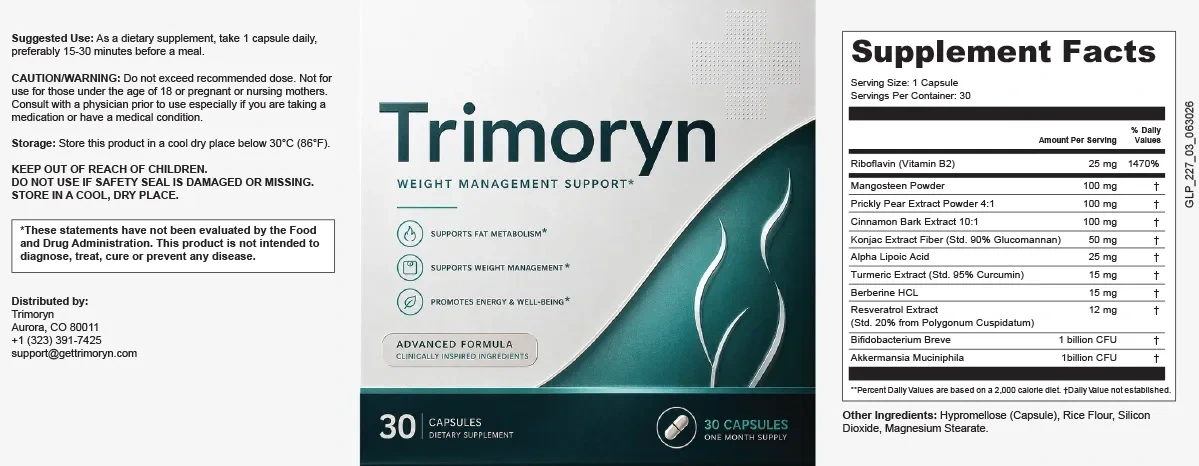
Trimoryn's fully disclosed Supplement Facts panel — every ingredient and dose shown.
Berberine HCL – 15 mg
The most talked-about ingredient — and the one with the most weight-and-metabolism research. Berberine influences blood sugar, insulin sensitivity and lipids, and meta-analyses show modest reductions in body weight and waist size. The main limitation: those studies used roughly 1,000-1,500 mg per day, while Trimoryn provides just 15 mg. That's a fraction of the researched dose, so it's unrealistic to expect the same effect from this amount.
Konjac Glucomannan (90%) – 50 mg
A soluble fiber that absorbs water and expands in the stomach, promoting fullness — the most plausible appetite-support mechanism in the formula. The main limitation is the dose: weight-loss studies typically used 2-4 GRAMS (2,000-4,000 mg) before meals, while Trimoryn contains 50 mg — far below that, and even the studied doses showed only small, inconsistent weight effects. At 50 mg, meaningful appetite suppression is unlikely.
Akkermansia Muciniphila – 1 billion CFU
A trendy 'next-generation' gut bacterium linked in emerging research to better metabolic health. A small human pilot study found pasteurised Akkermansia improved insulin sensitivity, which is noteworthy. But the evidence is early and limited, that study used a higher dose (~10 billion cells), and results in later trials have been mixed. A promising but unproven ingredient at a modest dose.
Bifidobacterium Breve – 1 billion CFU
A well-known probiotic strain that supports gut health and digestion. Some research links certain probiotics to modest metabolic and weight benefits, though results vary by strain and person. At 1 billion CFU it's a reasonable gut-support inclusion, but probiotics are not a proven weight-loss tool, and effects on the scale (if any) tend to be small.
Alpha Lipoic Acid (ALA) – 25 mg
An antioxidant compound studied for metabolic and modest weight effects. As with the others, the main issue is the dose: weight-related ALA studies generally used 300-1,800 mg per day, versus 25 mg here. At this amount it contributes antioxidant support but is very unlikely to drive weight loss.
Cinnamon Bark Extract (10:1) – 100 mg
A concentrated extract studied mainly for blood-sugar support. Steady blood sugar can help with cravings and energy, which indirectly supports weight goals, but cinnamon is not a proven weight-loss ingredient. A reasonable, well-dosed metabolic-support addition.
Turmeric Extract (95% Curcumin) – 25 mg
Standardised for curcumin, an anti-inflammatory antioxidant. Chronic inflammation is linked to metabolic problems, so there's an indirect rationale, but turmeric is not a weight-loss active in its own right, and 25 mg is a modest amount. Best seen as general antioxidant/anti-inflammatory support.
Riboflavin (Vitamin B2) – 25 mg
A B-vitamin essential for turning food into energy (energy metabolism). At 1,470% of the daily value it comfortably covers your needs and supports normal energy production — but note that correcting or exceeding a vitamin you likely already get from food does not itself cause weight loss.
Mangosteen Powder – 100 mg
A tropical fruit powder rich in antioxidants (xanthones). It contributes general antioxidant support and fits the formula's wellness theme, but has little direct weight-loss evidence in humans at this dose. A supportive, not central, ingredient.
Prickly Pear Extract (4:1) – 100 mg
A cactus extract containing fiber and antioxidants, traditionally linked to blood-sugar and mild fat-binding effects. The evidence is limited and modest, so treat it as supportive rather than a proven fat blocker. A reasonable addition to a metabolic-wellness blend.
Resveratrol (20%) – 12 mg
A polyphenol antioxidant (from Polygonum cuspidatum) popular for metabolic and longevity interest. Human weight evidence is weak and doses in research are typically far higher, so at 12 mg it's best viewed as antioxidant support rather than a weight-loss active.
The Overall Verdict on Trimoryn's Formula
Smart selection, modest dosing
Trimoryn's ingredient list is well considered and modern — berberine, glucomannan and Akkermansia are among the more interesting metabolic and gut ingredients available, and full disclosure is a real trust advantage. The consistent limitation is dose: several key actives (berberine 15 mg, glucomannan 50 mg, ALA 25 mg) sit well below the amounts used in research. So Trimoryn earns credit for transparency and design, but its likely real-world effect is gentle rather than clinical-strength.
If you're choosing Trimoryn, do so understanding this trade-off. You're getting a transparent, well-designed, non-stimulant formula with plausible supportive benefits — especially for appetite and gut health — but not a fully-dosed, clinical-strength weight-loss product. Pair it with real diet and lifestyle changes, keep expectations realistic, and it can be a reasonable addition to your routine.
Important: Trimoryn contains berberine, which can interact with several medications (for blood sugar, blood pressure and others). If you take any medication, are pregnant or nursing, are under 18, or have a health condition, consult a doctor or pharmacist before using Trimoryn. Some people experience mild digestive discomfort or bloating in the first week from the fiber and probiotics.